* All product/brand names, logos, and trademarks are property of their respective owners.
Some stories entertain you for a night. Some stories stay in your chest like a battle scar.
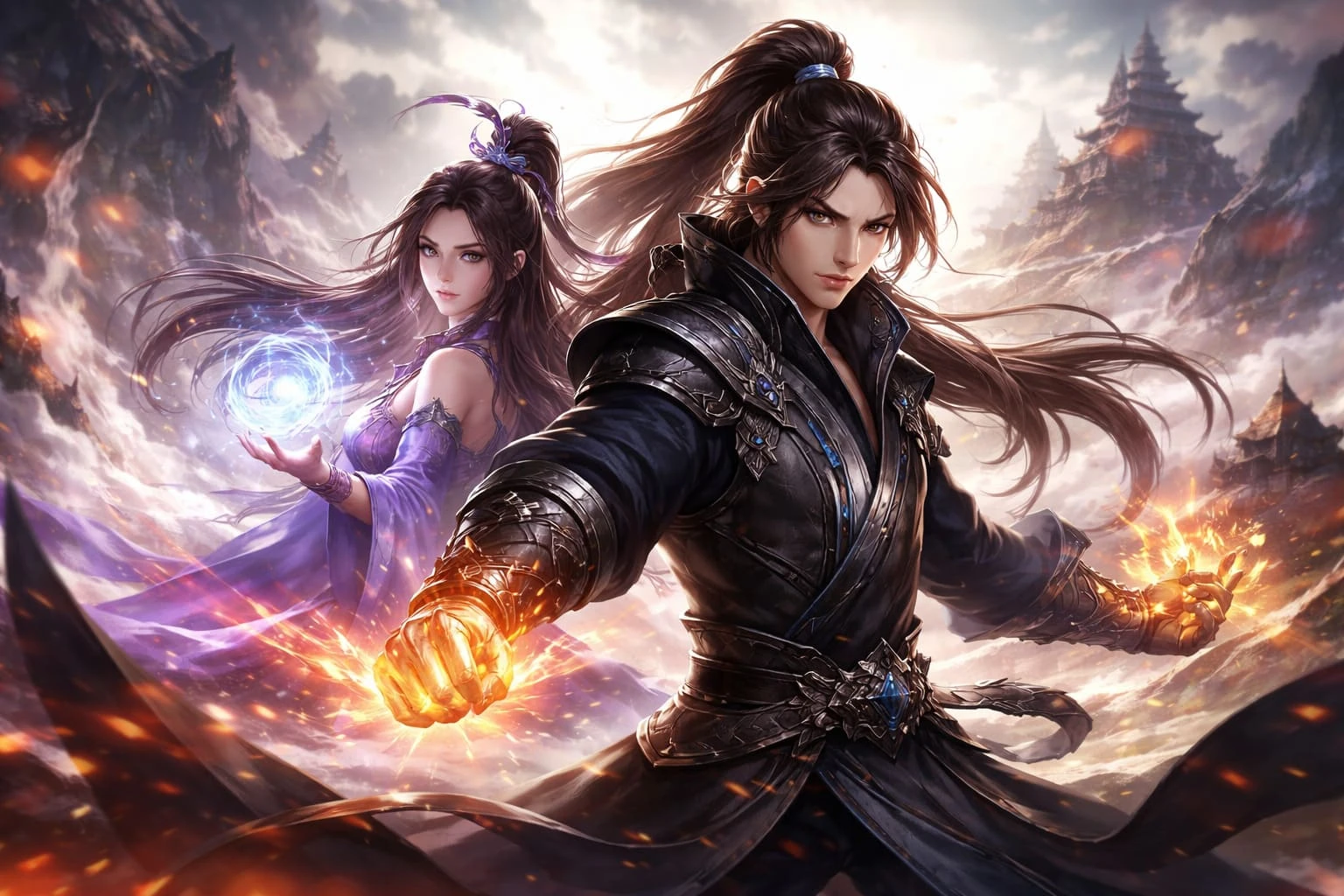
On the surface, this series looks like pure cultivation hype: crazy power-ups, brutal rivalries, clan humiliation, divine treasures, monster companions, and enough “I’ll prove them wrong” energy to make every underdog fan sit upright like it’s their final form awakening. But the reason Martial Universe hits differently is not just because the fights go hard. It’s because the story of Lin Dong is built on suffering, grit, family pride, sacrifice, and the stubborn refusal to accept the fate others try to force on you.
Lin Dong begins as a boy from a weaker, peripheral branch of the Lin Clan. His family has already been wounded by humiliation, especially after his father’s downfall, and he grows up in a world where strength decides respect. Then comes the turning point: the discovery of the Stone Talisman, the object that pushes him onto a path of cultivation, growth, danger, and eventual greatness. That setup sounds classic, sure, but the execution is what makes fans lock in. His journey is not just “boy gets stronger.” It is “boy gets broken, rebuilds himself, and then rewrites his destiny with blood, willpower, and straight-up menace.”
That’s exactly why this series carries so many real-life lessons. Beneath the cultivation system, ancient symbols, and large-scale battles, Martial Universe keeps asking one huge question: what does it really take to rise when the world already decided you were nothing?
Let’s talk about the seven biggest lessons this story teaches.
One of the strongest messages in Martial Universe is that being born in a weak position is not the same as being born without a future.
Lin Dong is not introduced as some untouchable genius floating in with perfect talent and a golden destiny soundtrack in the background. He starts off underestimated, looked down on, and tied to a family branch that lacks status. In a world like this, people read your value through your power and background almost instantly. That’s why his rise feels so satisfying. He does not inherit respect. He earns it.
Lin Dong’s life changes not because the world suddenly becomes fair, but because he refuses to let humiliation become his identity. That mindset is powerful. Your current condition might explain your struggle, but it does not have to define your ceiling. That’s pure underdog fuel, and honestly, it’s one of the reasons Lin Dong became such a beloved protagonist across the novel, donghua, and related fandom spaces.

This story does not protect Lin Dong from pain. It throws him into it.
He faces physical beatings, emotional pressure, family shame, and constant danger. But one of the best things about his character is that he never treats suffering like the end of the road. He treats it like a furnace. The more he gets pressed, the sharper he becomes. That’s not because pain is automatically noble. It’s because Lin Dong chooses to use it instead of drowning in it.
In real life, pain can either become a cage or a catalyst. Plenty of people get hurt once and decide never to try again. Lin Dong keeps doing the opposite. Every defeat becomes information. Every humiliation becomes motivation. Every near-collapse becomes another layer of resolve.
That is one of the most useful lessons in the entire series: don’t romanticize pain, but don’t waste it either.
One of the sneakiest lies people believe is that success belongs only to the naturally gifted. Martial Universe destroys that idea over and over again.
Yes, this world has geniuses. It has prodigies, monsters, chosen talents, elite clans, secret resources, and terrifying opponents who seem born five arcs ahead of everyone else. But Lin Dong’s real advantage is not simply talent. It’s his willingness to keep grinding when other people get comfortable. He learns fast, adapts quickly, and keeps pushing even when the gap looks unfair. The Stone Talisman gives him opportunity, but his rise still depends on his discipline and effort.
That’s why he feels so real. He’s not just overpowered because the plot said so. He keeps building himself.
This lesson matters because most people quit in the boring part. They want the transformation, but not the repetition. They want the aura, but not the routine. Lin Dong shows that greatness is often just consistency wearing battle armor. You don’t have to be the most talented person in the room if you are the one who refuses to stop improving.
And let’s be real, that’s the kind of protagonist energy that makes fans scream, “This is my goat,” with zero shame.

What makes Lin Dong’s journey emotionally strong is that it never feels purely selfish.
His story is tied deeply to his family’s suffering, dignity, and hope. The desire to grow stronger is not only about personal pride. It is about protecting the people he loves, restoring what was lost, and making sure those who were humiliated do not stay broken forever. That emotional foundation gives the story heart.
In real life, power without purpose becomes hollow fast. People burn out when they are chasing status for status’s sake. But when your effort is connected to love, protection, loyalty, and responsibility, it hits differently. That is one of the big emotional lessons of Martial Universe: strength matters more when it is used for someone beyond yourself.
Lin Dong is not born with perfect confidence. He builds it.
That’s important, because too many people imagine confidence as some magical personality trait you either have or don’t. But real confidence usually comes from repeated proof. You survive things. You improve. You fail, recover, and keep going. Bit by bit, you start trusting yourself more.
That is exactly what happens with Lin Dong.
He does not walk into every moment as an untouchable king. He grows into that presence through struggle. Every time he gets back up, every time he trains harder, every time he faces something bigger than himself and does not collapse, his confidence becomes more solid. It’s not fake swagger. It’s earned belief.
That’s why his aura feels deserved later on. He’s not confident because life was easy. He’s confident because life tried to break him and failed.
A lot of readers need that reminder. You do not have to wait until you “feel ready” to move. Sometimes action comes first, confidence comes second, and results come third. Lin Dong is basically the walking embodiment of that rule.
A good cultivation story is never just about who punches hardest. It’s about who adapts.
Martial Universe makes that clear again and again. Lin Dong survives because he thinks. He studies people, reads situations, times his moves, and knows when to push and when to retreat. Pure power matters, obviously, but intelligence is what allows power to become victory instead of reckless self-destruction.
Even the series itself emphasizes this kind of worldview through its cultivation philosophy. One widely repeated line associated with Wu Dong Qian Kun says: “At the peak of Martial Arts, break the Heavens and shake the Universe!” While this line is more of a franchise slogan than a specific character dialogue, it reflects the story’s whole energy: ascension is not passive, and growth demands control, discipline, and mastery.
The deeper message is simple: don’t just become stronger. Become sharper.
This is the biggest lesson in Martial Universe, and honestly, it’s the one that makes the series feel so personal for so many fans.
Lin Dong is constantly judged by what he currently is instead of what he could become. People underestimate him because of his background, his family branch, his starting power, and their own arrogance. They keep trying to decide his limits for him. And his entire journey becomes one long answer to that disrespect.
The danger is not just that others say those things. The danger is when you start believing them.
Lin Dong’s rise is so addictive because he never fully hands his future over to other people’s opinions. He may feel the pressure, but he never accepts their judgment as final truth. That is a deeply powerful mindset. Sometimes the most important thing you can do is protect your own belief long enough for your actions to make the noise for you.
And yes, that is maximum main-character behavior.
Famous Martial Universe lines fans remember.

“Lin Shan, you had better remember this!” (Lin Dong)
A fierce early vow from Chapter 1 that captures Lin Dong’s anger, pride, and refusal to stay humiliated.“Mother, don’t cry…” ( Lin Dong)
An early emotional promise that shows his motivation is rooted in family, not just power.“I saved you only because I want to kill you.” ( Ling Qingzhu)
Cold, iconic, and very on-brand for Ling Qingzhu’s detached presence when she re-enters Lin Dong’s life.“Do you still remember the bet we made back then?” ( Lin Dong)
A quieter line, but a fan-favorite kind of callback because it shows his growth and his history with Ying Huanhuan.“Possessing treasure is no sin, but it will often lead to trouble.” (Lin Dong)
A reflective line attributed in fan reference material that fits the entire dangerous treasure-and-power logic of the series.
At the end of the day, Martial Universe is not just a story about cultivation. It is a story about becoming.
That is why Lin Dong works so well as a protagonist. He is not inspiring because he is flawless. He is inspiring because he is relentless. He keeps adapting. He keeps growing. He keeps turning pain into momentum and setbacks into fuel. That journey is what gives Martial Universe its emotional punch across the novel and its adaptations.
So yes, the fights are awesome. The cultivation is hype. The lore is rich. The power scaling scratches that glorious monkey-brain progression itch. But the real reason this series stays with people is because it reminds us of something personal:
You do not have to accept the version of yourself the world first met.
You can become more.
And that, Senpai, is the kind of lesson that hits harder than any final-boss knockout.

No bio available yet.
Be the first to share your thoughts
No comments yet. Be the first to comment!
Share your thoughts and join the discussion below.